10 Essential Vastu Principles for Apartment Interiors
- contactwallandwood
- May 30
- 5 min read
Modern apartment living often comes with fixed layouts and limited structural flexibility. But that doesn’t mean you cannot create a Vastu-aligned home. With the right interior choices—from furniture placement and lighting to colors and décor—you can create a space that feels balanced, welcoming, and harmonious.
In modern Bangalore homes, homeowners are increasingly looking for interiors that are not only stylish but also functional, peaceful, and thoughtfully planned. Integrating Vastu principles into apartment interiors can help create a sense of balance while complementing contemporary design.
Vastu Shastra is a traditional Indian architectural system that focuses on balancing the five natural elements—earth, water, fire, air, and space. When applied thoughtfully to apartment interiors, it can help create spaces that feel more organized, comfortable, and harmonious.
Here are 10 essential Vastu principles to consider while designing your apartment interiors.
1. Keep the Entrance Bright and Welcoming

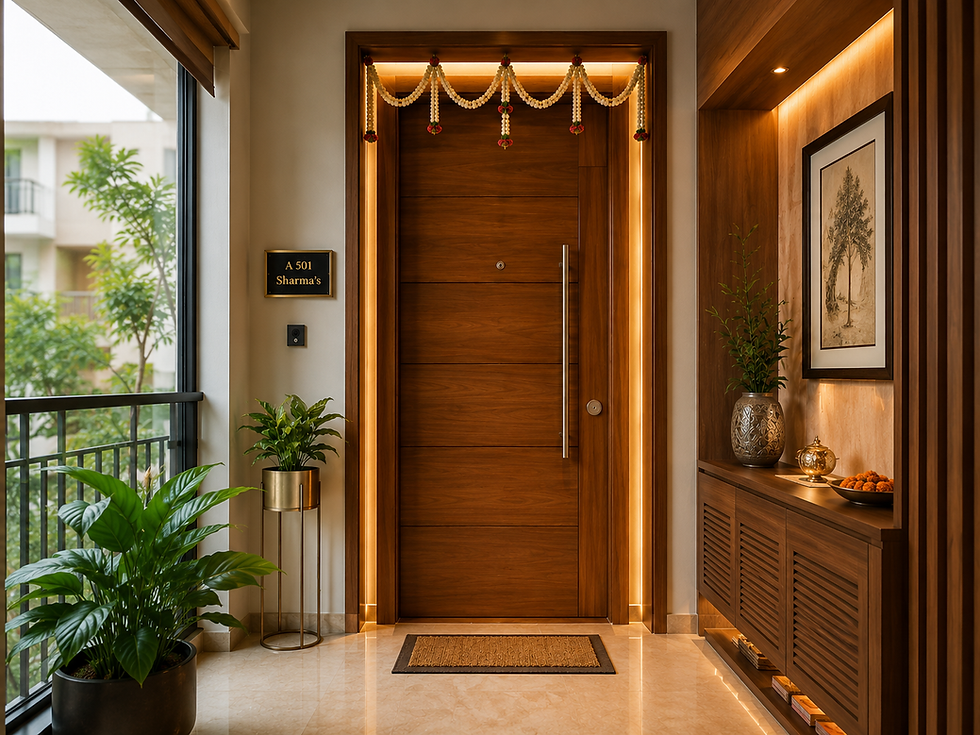
The entrance is considered the gateway for positive energy into the home. North, East, and North-East facing entrances are traditionally considered auspicious. However, in apartments, the exact placement of the entrance door within the layout is often considered as important as the overall facing direction.
Tips:
Use a solid wooden main door
Keep the entryway clutter-free
Add warm lighting near the entrance
Use a nameplate, toran, or subtle decorative elements
Avoid:
Dark or dull entrances
Shoe clutter near the doorway
Mirrors directly opposite the main door
A clean and welcoming entrance creates a positive first impression while helping the home feel brighter and more inviting.
2. Design an Open and Balanced Living Room

The living room should feel spacious, bright, and easy to move through. According to Vastu principles, the North, East, North-East, and in some layouts, the North-West zone are considered suitable for living areas.
Tips:
Place heavy furniture along South or West walls
Keep the center area open
Use light-colored curtains and walls
Add indoor plants in the North or East corners
Avoid:
Blocking natural pathways with furniture
Excessive dark colors
Clutter in the center of the room
An airy living room encourages better circulation, openness, and a more comfortable atmosphere—something many homeowners now prioritize in modern Bangalore apartments.
3. Position the Bed Correctly in the Bedroom

The bedroom should promote relaxation and stability. The South-West zone is traditionally considered ideal for the master bedroom.
Tips:
Sleep with your head facing South or East
Use calming colors like beige, cream, or pastel shades
Keep the bed against a solid wall
Use soft lighting for a relaxing atmosphere
Avoid:
Mirrors facing the bed
Beds placed under ceiling beams
Excessive electronics in the room
According to Vastu principles, a thoughtfully planned bedroom can help create a calm and restful environment.
4. Place the Kitchen in the Right Zone

The kitchen represents the fire element and is ideally located in the South-East corner of the apartment. If a South-East kitchen is not possible, the North-West zone is often considered the next preferred option.
Tips:
Position the stove in the South-East section
Cook facing East whenever possible
Keep the sink away from the stove
Use warm colors like yellow, orange, or earthy tones
Avoid:
Cluttered countertops
Poor ventilation
Placing fire and water elements too close together
Even in compact Bangalore apartments, thoughtful kitchen planning can help maintain both functionality and balance.
5. Create a Calm Puja or Meditation Space

Every home benefits from a dedicated spiritual or meditation corner. The North-East direction is traditionally considered the most auspicious location for a puja area.
Tips:
Use soft lighting
Keep the area elevated and clean
Choose calming colors like white, beige, or light green
Use wooden or brass décor elements
Avoid:
Placing the puja unit near bathrooms
Clutter around sacred items
Dark or enclosed corners
A peaceful meditation or prayer space can add a sense of calm and mindfulness to the home.
6. Maintain Proper Bathroom Placement and Hygiene

Bathrooms are generally considered more suitable in the West or North-West zones of the home, while the North-East and the center of the house are usually avoided.
Tips:
Ensure proper ventilation
Use light-colored tiles
Keep the bathroom dry and clean
Fix leaks immediately
Avoid:
Poor drainage
Dark interiors
Constant moisture buildup
Clean and well-ventilated bathrooms are believed to contribute to a more balanced living environment.
7. Keep the Center of the Home Open

In Vastu, the center of the house is known as the Brahmasthan and is ideally kept as open as possible.
Tips:
Avoid heavy furniture in the center
Maintain free movement around the house
Use minimal décor in central areas
Avoid:
Large storage units in the middle of rooms
Excessive clutter
Blocking walkways
An open center improves the sense of spaciousness and allows the layout to feel more connected and free-flowing.
8. Use Balanced Colors and Natural Materials

Colors and materials significantly influence the mood and feel of a home.
Tips:
Use soft, earthy, or pastel shades
Incorporate wood, stone, brass, or natural textures
Maximize natural light wherever possible
Avoid:
Excessively dark wall colors
Harsh artificial lighting
Overuse of synthetic materials
Balanced interiors create a calm, comfortable, and visually appealing living environment.
9. Arrange Furniture Thoughtfully

Furniture placement plays an important role in maintaining comfort, functionality, and flow inside the apartment.
Tips:
Keep pathways open
Place heavier furniture on South or West walls
Many Vastu practitioners recommend placing mirrors on North or East walls
Choose functional and space-efficient furniture
Avoid:
Overcrowded layouts
Mirrors directly facing the entrance or bed
Blocking windows with bulky furniture
Thoughtful furniture placement helps maximize space efficiency while creating a more organized and harmonious interior.
10. Add Greenery and Positive Décor Elements

Plants and decorative elements help bring freshness, vibrancy, and a connection to nature into the home.
Tips:
Place indoor plants in North or East areas
Use nature-inspired artwork
Add fresh flowers or soft decorative lighting
Consider keeping a Tulsi plant, which is traditionally regarded as auspicious in many Indian homes
Use décor that creates a peaceful atmosphere
Avoid:
Thorny plants indoors
Broken décor items or mirrors
Aggressive or negative artwork
Simple greenery and thoughtful décor choices can instantly uplift apartment interiors.
Final Thoughts
Vastu for apartment interiors is not about rigid rules or major structural changes. In modern homes, even small adjustments in furniture placement, lighting, colors, and organization can help create a more balanced and harmonious environment.
The key is to focus on openness, cleanliness, natural light, and thoughtful interior planning. When combined with functional design, these principles can help create a home that feels calmer, brighter, and more welcoming.
Looking to create a Vastu-friendly apartment interior that feels balanced, functional, and visually appealing? Contact us to transform your space with thoughtful planning and modern Bangalore interior design solutions.
_edited.jpg)
Comments